

The pursuit of radiant, youthful skin has long been a journey defined by expensive salon visits and complex chemical treatments. However, a significant shift in the beauty landscape has brought professional-grade technology directly into our homes. You have likely seen them on social media or in high-end boutiques: the sleek, glowing devices known as red light therapy masks.
While they might look like something out of a futuristic film, the technology behind these masks is rooted in decades of clinical research. Originally developed by NASA to assist with plant growth in space and later adapted for wound healing in astronauts, LED therapy has become one of the most respected non-invasive treatments in modern dermatology.
If you have ever wondered whether a red light therapy mask truly delivers on its promises of reduced wrinkles and improved skin texture, you are not alone. In this guide, we will explore the intricate science of photobiomodulation, the clinical efficacy of specific wavelengths, and how you can harness this light to revitalize your complexion from within.
What is a Red Light Therapy Mask?
At its core, a red light therapy mask is a wearable device that utilizes light-emitting diodes (LEDs) to deliver specific wavelengths of light to the skin. Unlike ultraviolet (UV) light, which causes damage and aging, red and near-infrared light are non-thermal and non-ionizing. They do not burn the skin; instead, they communicate with your cells.
The process is technically known as photobiomodulation (PBM). This is a biological reaction where the skin absorbs light energy and converts it into cellular energy. When you wear a high-quality device like the Seven-Color Beauty Mask, your skin is essentially "charging" its own repair mechanisms.
While the visible red light provides an immediate aesthetic glow, the real transformation happens deep beneath the surface, where your skin's structural foundations are built.
The Cellular Powerhouse: How It Works at a Molecular Level
To understand why red light therapy works, we must look at the mitochondria: the "powerhouses" of your cells. Within these tiny structures is a specific enzyme called cytochrome c oxidase (CCO). This enzyme is the primary target for red and near-infrared light.
When your skin is exposed to the correct wavelengths, the CCO enzyme absorbs the light photons. This absorption triggers a cascade of beneficial biochemical reactions:
- Increased ATP Production: Adenosine triphosphate (ATP) is the universal energy currency of cells. By stimulating CCO, red light therapy boosts ATP production, providing your skin cells with the fuel they need to repair damage and replicate.
- Reduced Oxidative Stress: The therapy helps modulate reactive oxygen species, which are often responsible for inflammation and premature aging.
- Modulation of Nitric Oxide: Light exposure helps release nitric oxide, which improves local blood flow, ensuring that vital nutrients and oxygen reach your skin more efficiently.

By optimizing your cellular environment, you are not just masking imperfections; you are fundamentally improving the health and resilience of your skin.
Decoding the Wavelengths: 630nm vs. 830nm
Not all light is created equal. The efficacy of a red light therapy mask depends entirely on the specific wavelengths it emits, measured in nanometers (nm). Most clinical research focuses on two primary ranges that offer the best results for anti-aging and skin rejuvenation.
630nm: The Surface Specialist
Visible red light, typically around the 630nm to 660nm range, is highly effective at treating the upper layers of the skin. It penetrates roughly 1 to 2 millimeters into the papillary dermis. This is where your fine lines, surface texture issues, and redness reside.
By targeting this layer, 630nm light stimulates the production of collagen I and III. You will notice that your skin appears smoother, more vibrant, and more even in tone. It is the perfect wavelength for addressing the first signs of aging and maintaining a luminous glow.
830nm: The Deep Rejuvenator
Near-infrared (NIR) light, specifically in the 830nm to 850nm range, is invisible to the human eye but incredibly powerful. Because it has a longer wavelength, it can penetrate much deeper: up to 5 millimeters into the reticular dermis.
This deeper penetration is crucial for structural rejuvenation. NIR light reaches the fibroblasts responsible for building the skin's "scaffolding." By stimulating these deep-seated cells, 830nm light helps improve skin density, elasticity, and firmness. Many of the most successful clinical trials combine 630nm and 830nm light to provide a comprehensive, multi-layer treatment.
Clinical Reality: What the Science Says
You might be asking: is there hard evidence that these masks work? The answer is a resounding yes. A landmark study published by Wunsch and Matuschka investigated the effects of red light on skin complexion and collagen density. The researchers found that participants treated with red light therapy showed significantly improved skin complexion, skin feeling, and collagen density compared to the control group.
Furthermore, clinical reviews of photobiomodulation for skin aging consistently report:
- Significant reduction in fine lines and wrinkle depth after 8 to 12 weeks of consistent use.
- Measurable increases in dermal thickness, suggesting that the skin is physically becoming stronger and more youthful.
- Faster recovery times for skin irritation and post-inflammatory hyperpigmentation.
It is important to manage expectations: red light therapy is a cumulative treatment. Unlike a surgical facelift, which provides instant (and often invasive) results, LED therapy works with your body's natural rhythms. Most clinical protocols suggest using the device for 10 to 20 minutes, 3 to 5 times per week, for at least 8 weeks to see transformative changes.

Elevating Your Routine with TheAurelia Technology
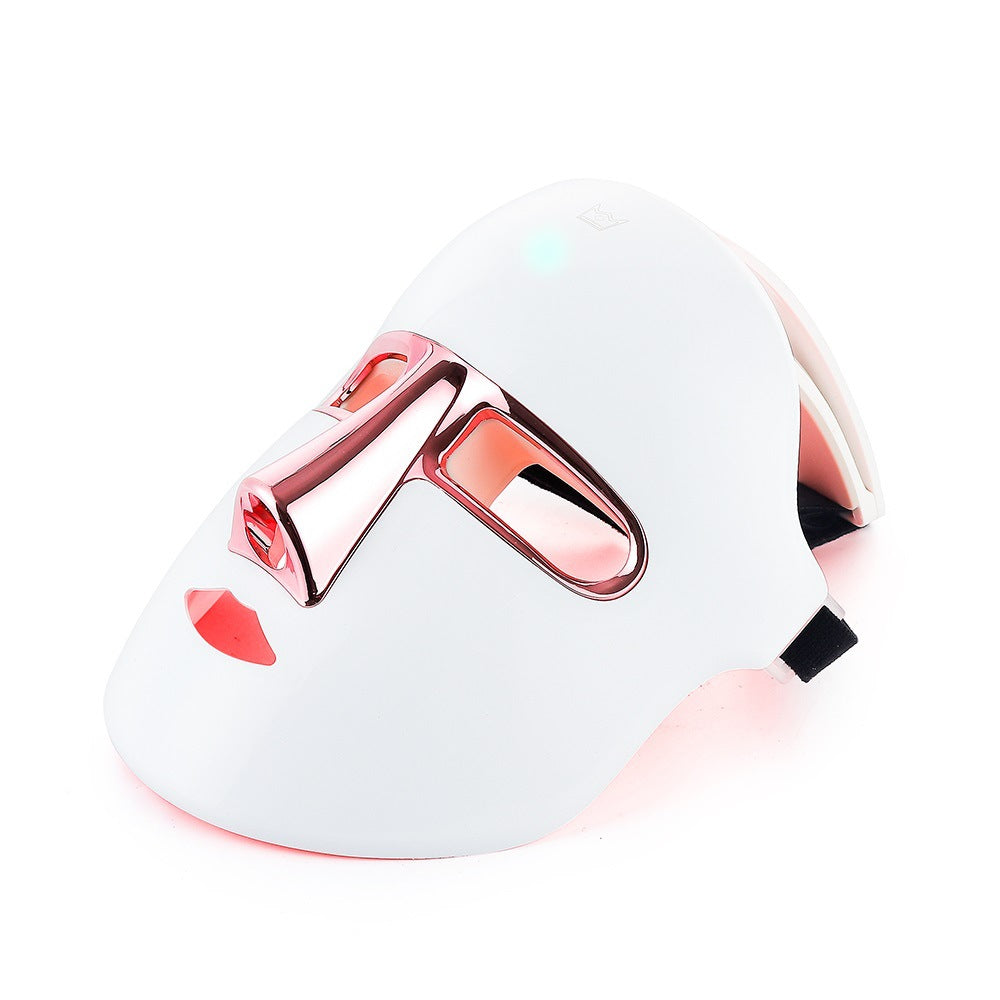
At TheAurelia, we have integrated these clinical principles into our high-performance beauty tools. Our Seven-Color Beauty Mask is designed to provide professional results with the convenience of home use.
While red light is our hero for anti-aging, our device offers a full spectrum of therapeutic options:
- Red Light (630nm): For collagen stimulation and fine line reduction.
- Blue Light (415nm-470nm): To target acne-causing bacteria and clarify the complexion.
- Green Light (525nm): To balance skin tone and reduce hyperpigmentation.
- Yellow Light (590nm): To soothe redness and improve microcirculation.
For those who prioritize portable, high-intensity rejuvenation, our Rechargeable LED Beauty Mask ensures that you can maintain your skincare ritual wherever you are. By using clinical-grade LEDs and optimized irradiance levels (the measure of light power per area), we ensure that your skin receives the precise dosage required to trigger photobiomodulation.
How to Get the Most Out of Your Mask
To ensure you achieve the best possible results with your red light therapy mask, follow these professional tips:
- Start with Clean Skin: Light cannot penetrate through thick makeup, SPF, or heavy oils. Always cleanse your face thoroughly before your session.
- Consistency is Key: Think of LED therapy like going to the gym for your skin. One session is lovely, but the real results come from a consistent 8-to-12-week commitment.
- Pair with Serums Post-Treatment: After your session, your skin's microcirculation is increased. This is the perfect time to apply a high-quality Vitamin C or Hyaluronic Acid serum, as absorption will be enhanced.
- Protect Your Eyes: While red light is generally safe, it is bright. Most high-quality masks, including those from TheAurelia collection, are designed with eye protection or come with specific guidelines to ensure your comfort.
Conclusion
The science is clear: red light therapy masks are not just a trend; they are a scientifically validated tool for skin health. By utilizing the principles of photobiomodulation and the specific power of 630nm and 830nm wavelengths, you can effectively stimulate collagen, reduce the appearance of aging, and achieve a professional-level glow from the comfort of your home.
Are you ready to experience the transformative power of light? We invite you to explore our collection of advanced beauty devices and discover the perfect addition to your self-care routine.


