

When you embark on a journey toward youthful, radiant skin, two names consistently rise to the top of the conversation: LED light therapy and topical retinoids. One is a high-tech marvel that uses specific wavelengths of light to energize your cells, while the other is a biological powerhouse derived from Vitamin A that has been the dermatologist’s gold standard for decades.
If you are looking to diminish fine lines, erase sun damage, or firm up your complexion, you might find yourself at a crossroads. Should you invest in a professional-grade led light therapy mask or stick to your evening application of retinol? The truth is that both offer transformative results, but they work in entirely different ways.
In this guide, we will explore the science behind these two anti-aging giants, compare their clinical benefits, and reveal why the most effective skincare routine might not require you to choose between them at all.
The Science of Photobiomodulation: How LED Masks Work
LED light therapy, or photobiomodulation, feels like something out of a science fiction novel, yet its roots are firmly planted in clinical research. Initially explored by NASA to aid in plant growth and later for wound healing in space, this technology uses non-UV, low-level light to trigger a series of biological responses within your skin.
When you wear a device like the TheAurelia LED Beauty Mask, specific wavelengths of light penetrate the skin at varying depths. The most common wavelength for anti-aging is red light, typically ranging from 620nm to 750nm. These photons are absorbed by your mitochondria: the powerhouses of your cells. This absorption boosts the production of Adenosine Triphosphate (ATP), which provides the energy your cells need to repair damage and produce fresh collagen and elastin.
Unlike many aggressive treatments, LED therapy is entirely non-invasive. It does not rely on causing controlled "damage" to the skin to trigger a response. Instead, it provides a gentle, energetic nudge that supports your skin’s natural regenerative cycles.

The Biological Gold Standard: How Retinoids Work
Topical retinoids, including over-the-counter retinol and prescription-strength tretinoin, operate on a genetic level. When you apply a retinoid to your skin, it binds to specific nuclear retinoic acid receptors. This action essentially "reprograms" your skin cells to behave like younger, healthier versions of themselves.
Retinoids are famous for two primary functions: increasing cellular turnover and inhibiting the enzymes that break down collagen. By speeding up the rate at which new cells reach the surface, retinoids can smooth out rough texture, fade hyperpigmentation, and unclog pores.
However, this biological intensity often comes with a price. Many users experience what is known as retinoid dermatitis: a period of redness, peeling, and sensitivity that can last for several weeks as the skin adjusts. While retinoids are incredibly effective, they require patience and a resilient skin barrier.
Head-to-Head: LED Mask vs. Retinoids
To understand which treatment might be better for your specific goals, let's look at how they perform across the most common skincare concerns.
Speed of Visible Results
One of the most surprising findings in clinical studies is the speed at which LED therapy can show results. Research indicates that red light therapy can improve skin elasticity and reduce the depth of fine lines in as little as 2 to 4 weeks of consistent use.
In contrast, retinoids are a marathon, not a sprint. While you may notice a smoother texture early on, the significant dermal remodeling required to erase deep wrinkles typically takes 12 to 24 weeks of continuous application.
Irritation and Sensitivity
If you have sensitive skin, the led light therapy mask is often the superior choice. Red and near-infrared light are inherently anti-inflammatory. They help to soothe redness and support the skin barrier.
Retinoids, conversely, are notorious for causing initial irritation. They can make the skin more reactive to the sun and other active ingredients, requiring a very careful "low and slow" introduction into your routine.
Depth of Treatment
Retinoids excel at surface-level transformations: texture, tone, and pore size. Because they physically alter the epidermis, they are unsurpassed for addressing sunspots and acne.
LED masks, particularly those incorporating near-infrared wavelengths (around 830nm), can reach the deeper layers of the dermis that topicals often struggle to penetrate. This makes LED therapy exceptionally effective for structural firming and overall skin "density."

The Synergy: Why 1 + 1 = 3
While it is tempting to pick a winner, the most radiant results often come from using both technologies in tandem. Dermatologists frequently refer to this as synergistic phototherapy. When you combine the biological "blueprints" provided by retinoids with the cellular "energy" provided by an LED mask, you create the perfect environment for rejuvenation.
Here is how they work together to transform your skin:
- Energy and Building Blocks: Retinoids tell your skin to produce more collagen. LED light provides the ATP energy required for the fibroblasts to actually do the work.
- Managing Irritation: One of the greatest benefits of using a red light therapy mask is its ability to mitigate the side effects of retinoids. The anti-inflammatory properties of red light can help reduce the redness and peeling associated with starting a new Vitamin A regimen.
- Enhanced Barrier Function: Using red light therapy consistently has been shown to improve ceramide synthesis, which strengthens your skin barrier. A stronger barrier allows you to tolerate higher concentrations of retinoids with less discomfort.
Safety First: How to Combine LED and Retinoids
To achieve the best results without overstressing your skin, timing and wavelength selection are critical.
The Timing Rule
Never apply a strong retinoid immediately before using your LED mask. Some retinoid formulations are light-sensitive and may degrade under the intense light of the mask, making them less effective. Furthermore, red light can increase skin permeability; applying a potent active immediately before treatment could lead to unexpected irritation.
The best approach is to use your TheAurelia Seven-Color Beauty Mask on clean, dry skin. Once your 10 to 20-minute session is complete, you can follow up with your favorite retinoid serum or cream. Alternatively, many enthusiasts choose to use their LED mask on "off" nights when they aren't applying active acids or retinoids.
The Blue Light Caution
While red and orange light are wonderful companions for retinoids, blue light (typically around 415nm) requires caution. Blue light is excellent for killing acne-causing bacteria, but it also generates reactive oxygen species (ROS). Because retinoids can deplete some of the skin's natural antioxidant defenses, combining blue light and retinoids at the same time can lead to oxidative stress and increased sensitivity. If your goal is anti-aging, stick to the red, orange, and near-infrared settings on your device.
Choosing Your Device: TheAurelia Advantage
At TheAurelia, we believe that professional-grade technology should be accessible to everyone. Our range of beauty tools is designed to bridge the gap between expensive salon visits and your daily at-home ritual.
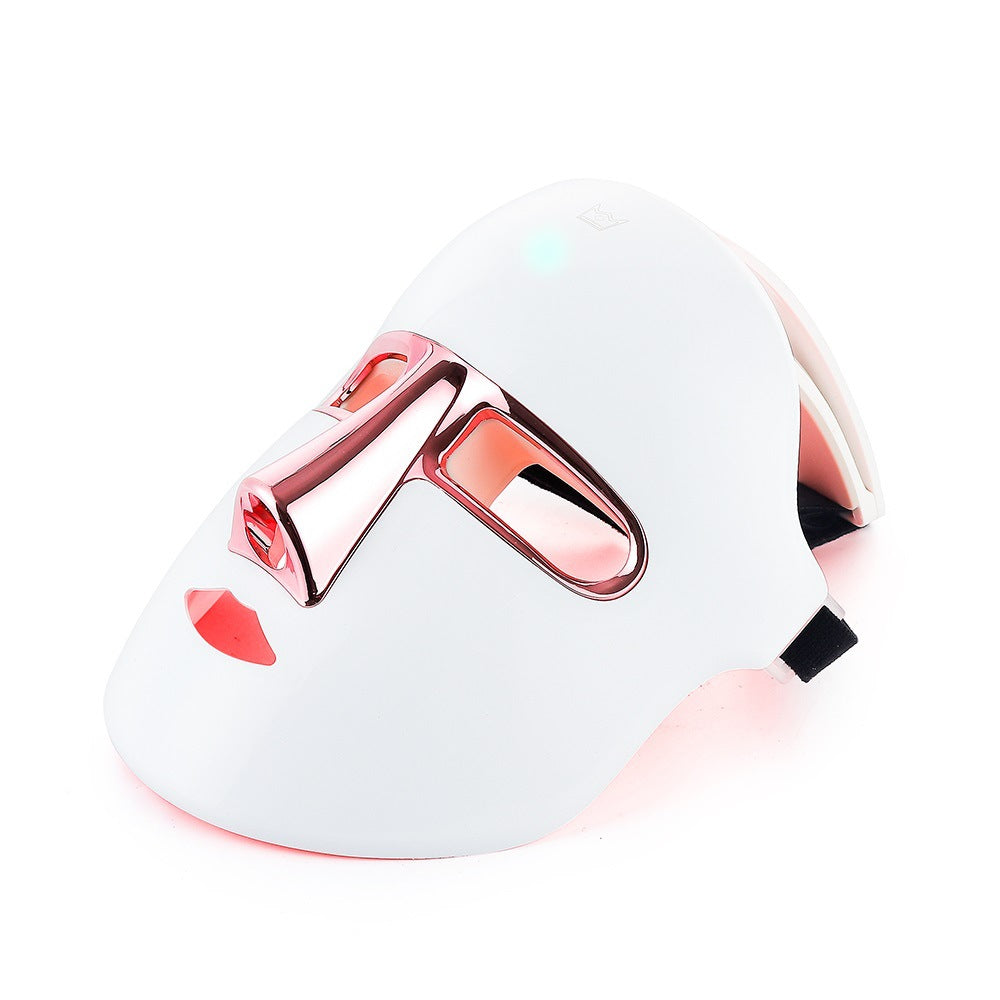
If you are just starting your light therapy journey, our Rechargeable LED Beauty Mask offers three essential wavelengths:
- Red Light (620-750nm): The ultimate anti-aging tool for elasticity and metabolism.
- Blue Light (476-495nm): For those days when oil control and acne prevention are the priority.
- Orange Light (590-620nm): To soothe redness and balance your skin tone after a long day.
For the skincare connoisseur who wants the full spectrum of benefits, our Seven-Color Beauty Mask provides a comprehensive suite of therapies, including green light for hyperpigmentation and positive ion technology to enhance the absorption of your evening skincare products.
Conclusion: A Radiant Future
In the debate between LED light therapy masks and topical retinoids, the winner is ultimately your skin. Retinoids remain the undisputed champion for surface texture and long-term cellular reprogramming, while LED therapy offers a fast-acting, non-invasive way to boost energy and firm the skin from within.
By integrating both into your routine, you are not just treating the symptoms of aging: you are providing your skin with the tools and the energy it needs to thrive. We invite you to explore the transformative power of light and discover how a few minutes of self-care each day can lead to a lifetime of radiance.
Visit our Facial Rejuvenation Collection today to find the perfect partner for your skincare journey.


