

We have all been there, standing in front of the mirror, frustrated by those persistent tiny dark dots on our nose and chin. It is tempting to simply reach for a metal tool or use our fingertips to squeeze them away, but as any skincare enthusiast knows, this often leads to redness, irritation, and even permanent scarring. The secret to a truly clear complexion does not lie in the force of your hands, but in the science of temperature.
When it comes to clearing out congestion, the debate between heated extraction and traditional cold methods is more than just a matter of comfort. It is a matter of biology. Understanding how heat interacts with your skin's natural oils can be the difference between a painful afternoon and a radiant, spa-like transformation. In this guide, we will explore why a blackhead remover with heat is the modern standard for maintaining pore health and why cold extraction might be doing more harm than good.
The Science of Sebum: Why Temperature Matters
To understand why heat is so effective, we first need to look at what a blackhead actually is. Each pore contains a sebaceous gland that produces sebum, a natural oil designed to keep your skin hydrated and protected. However, when dead skin cells and excess oil get trapped in the follicle, they form a plug. When this plug is exposed to air, it oxidizes and turns black, creating the classic blackhead.
Sebum is essentially a complex mixture of triglycerides, wax esters, and squalene. At room temperature, this mixture can become thick and tacky, almost like cold candle wax. This high viscosity is what makes blackheads so difficult to remove. If you try to extract a cold, hardened plug of oil, it resists movement. You are forced to apply significant mechanical pressure to the surrounding skin, which can cause the follicle wall to tear or lead to bruising.

When you introduce controlled warmth, typically between 38 and 42 degrees Celsius, a fascinating physical change occurs. The sebum reaches its melting point and shifts from a solid-like state to a more fluid, liquid state. Scientific studies on sebum rheology show that even a slight increase in temperature significantly decreases oil viscosity. By warming the area, you are essentially liquefying the blockage, allowing it to slide out of the pore with minimal effort.
The Myth of Opening and Closing Pores
You may have heard the common phrase that steam opens your pores and cold water closes them. In reality, pores do not have muscles, so they cannot open and close like doors. However, temperature does change how the pore opening behaves.
Heat causes a functional relaxation of the surrounding tissue. It softens the stratum corneum, which is the outermost layer of your skin, and hydrates the keratinized cells that hold the blackhead in place. This makes the skin more pliable and the pore opening more accommodating. While the pore itself remains the same size, the tissue around it becomes much more flexible, facilitating a smoother exit for the debris.
Conversely, cold extraction works against the skin’s natural resistance. Without the softening effect of heat, the skin remains rigid. Attempting to pull or squeeze debris through a tight, unyielding opening is what leads to the trauma we often see with manual extractions. This is why professional estheticians almost always begin a treatment with a warm compress or steam.
Why Cold Extraction Can Be Risky
Traditional cold extraction refers to any method where the skin has not been prepped with heat. This includes using manual metal loops, adhesive strips, or basic vacuum devices without a heating element. While these methods can sometimes yield results, they often come with a high price for your skin health.
Because the sebum plug is hard and the skin is stiff, you must use more force to achieve clearance. This mechanical stress can lead to several issues:
- Broken Capillaries: The intense pressure required to dislodge a cold blackhead can rupture the tiny blood vessels near the surface of the skin, leading to permanent spider veins.
- Inflammation and Redness: Aggressive squeezing triggers an inflammatory response, making the skin stay red and swollen for days after the treatment.
- Incomplete Extraction: When a plug is cold and brittle, it is more likely to break apart during extraction. This leaves the bottom half of the blockage inside the pore, which can quickly lead to a full-blown acne breakout.
- Skin Tearing: In extreme cases, the force used can actually tear the skin or create micro-abrasions that are susceptible to infection.
By switching to a blackhead remover with heat, you mitigate these risks by letting physics do the heavy lifting instead of brute force.
Introducing TheAurelia Heating Pore Cleanser
At TheAurelia, we believe that professional-grade technology should be accessible in the comfort of your own home. Our Heating Pore Cleansing Facial Export Blackhead Apparatus was designed specifically to bridge the gap between salon treatments and your nightly routine.
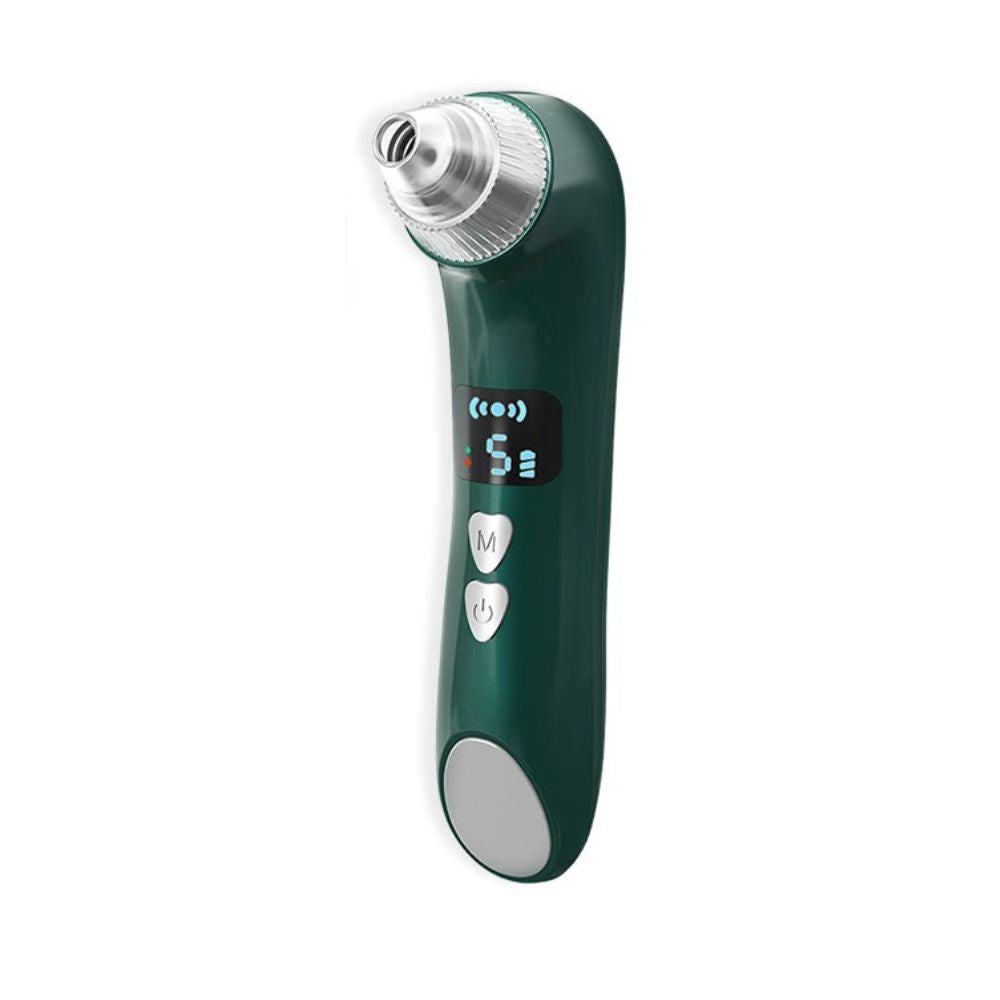
This device is not just a vacuum; it is a comprehensive pore-health tool. It features a built-in heating element that prepares the skin before suction begins. By applying the warm massage head to your problem areas, you can safely soften the sebum and relax the skin tissue. Once the skin is prepped, the device utilizes ultrasonic vibration technology to further loosen dirt and oil residue.
The technical specifications are designed for safety and efficacy. With a maximum suction power of 54KPA, it is strong enough to remove deep-seated impurities but gentle enough to avoid bruising when used correctly. The device offers five customizable suction levels and three distinct heating modes, allowing you to tailor the treatment to your specific skin sensitivity.
Heat vs. Cold: A Comparative Analysis
| Feature | Heated Extraction (TheAurelia) | Traditional Cold Extraction |
|---|---|---|
| Sebum State | Liquefied and pliable | Hardened and waxy |
| Skin Texture | Softened and flexible | Rigid and resistant |
| Required Force | Low to moderate suction | High mechanical pressure |
| Comfort Level | Warm and relaxing | Often painful or pinching |
| Risk of Bruising | Minimal with proper technique | High due to force |
| Overall Efficacy | Deeper, more complete clearance | Surface-level or incomplete |
As you can see, the integration of heat transforms the extraction process from a chore into a sophisticated self-care ritual. It respects the delicate nature of your skin barrier while achieving a level of cleanliness that manual washing simply cannot match.
How to Optimize Your Results
To get the most out of your blackhead remover with heat, we recommend a specific routine that maximizes pore health and minimizes irritation.
Start by thoroughly cleansing your face with a gentle, non-foaming cleanser to remove surface oils. Once your skin is dry, activate the heating mode on your Aurelia device. Gently press the heating head against your nose, chin, and forehead for two to three minutes. You will feel a soothing warmth as the sebum begins to soften.

After the heating phase, select the lowest suction level. Move the device in a continuous, gliding motion across the skin. Never let the vacuum sit in one spot for more than two seconds, as this is how bruising occurs. The liquefied blackheads should slide out effortlessly. Once finished, splash your face with cool water or use a chilled LED beauty mask to soothe the skin and support its natural recovery process.
Maintaining Pore Health Between Treatments
While the Aurelia Heating Pore Cleanser is a powerful tool, it works best as part of a holistic skincare strategy. Between sessions, focus on maintaining the fluidity of your sebum. This can be achieved by staying hydrated and using ingredients like salicylic acid, which is oil-soluble and helps to keep the interior of the pore clear.
Integrating regular heat treatments into your facial rejuvenation routine ensures that debris never has the chance to harden into stubborn, oxidized blackheads. It is about working with your body’s natural chemistry rather than fighting against it.
Your Path to a Radiant Complexion
True beauty is found when technology meets the natural rhythms of our skin. By choosing a blackhead remover with heat, you are making a conscious decision to prioritize the long-term health of your pores. You are trading aggression for intelligence and discomfort for a radiant, healthy glow.
We invite you to explore our full range of high-performance beauty tools and discover how easy it can be to achieve professional results at home. Your skin deserves the gentle, effective care that only thermal technology can provide.


